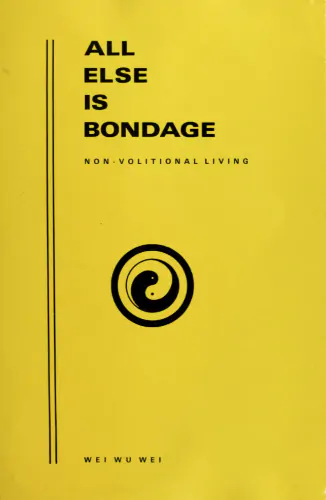
All Else Is Bondage (1964)
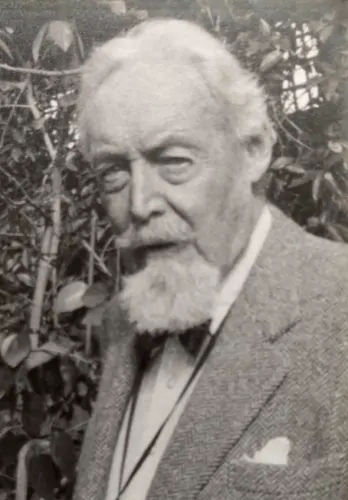
Terence James Stannus Gray, known by the pen name Wei Wu Wei, was a British theater producer, mystic and Taoist philosopher. Born into an Anglo-Irish family at Felixstowe, Suffolk, Gray was educated at Eton and Oxford and initially made his mark in the 1920s as the creator of the Cambridge Festival Theatre, producing over one hundred experimental plays between 1926 and 1933.
After abandoning theater, Gray traveled extensively in Asia, spending time at Ramana Maharshi’s ashram in Tiruvannamalai, India, before turning fully to Eastern philosophy. Under his Taoist pseudonym Wei Wu Wei (literally “action without action”), he authored eight influential works between 1958 and 1974—beginning with Fingers Pointing Towards the Moon—and remained anonymously published until revealing his identity in the 1970s.His writings, noted for their fusion of Zen, Advaita Vedanta, and Taoism, influenced figures such as G. Spencer-Brown and Ramesh Balsekar. In later life, he resided in Monaco with his second wife, Princess Natalie Imeretinsky, leaving an enduring legacy as a bridge between Western and Eastern thought.
Alphabetic
Date
Duration
Word Count
Popularity
Date
1964
Format
Book
Word Count
14,102
Reading time
≈ 1.3 hours
Quotes
41
Views
451
These thirty-four powerful essays, based on Taoist and Buddhist thought, constitute a guide to what the author calls “non-volitional living”—the ancient understanding that our efforts to grasp our true nature are futile. Wei Wu Wei explains these venerable spiritual traditions in the context of modern experience, using wit and considerable precision to convey their profound insight into the very nature of existence.
Date
December 1963
Format
Book
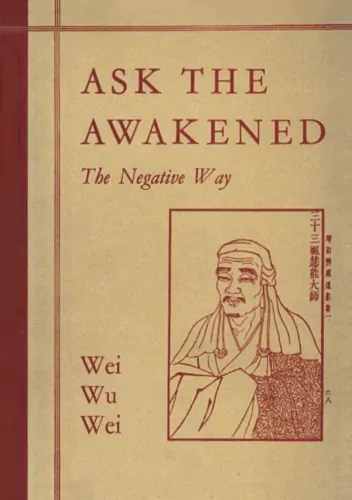
Wei Wu Wei’s unique and fresh interpretation of the ancient teachings opens the reader’s eyes: “Why are you unhappy? Because 99.9 percent of everything you think, and of everything you do, is for yourself—and there isn’t one.” This powerful book rewards by exposing illusions and takes the reader beyond logic to the inexpressible truth of existence.
Date
1965
Format
Book
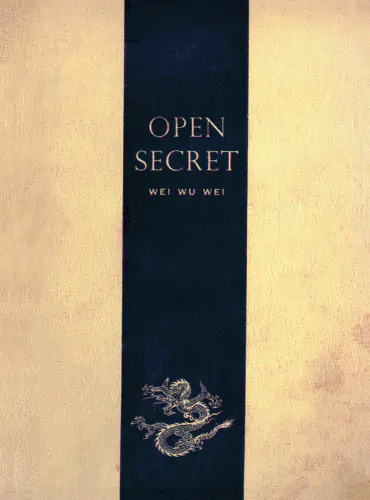
In poetry, dialogs, epigrams, and essays, Wei Wu Wei addresses our illusions concerning the mind, the self, logic, time, space, and causation. His substantive interpretation of The Heart Sutra—the epitome of Buddhist teachings—conveys the inexpressible truth of existence.