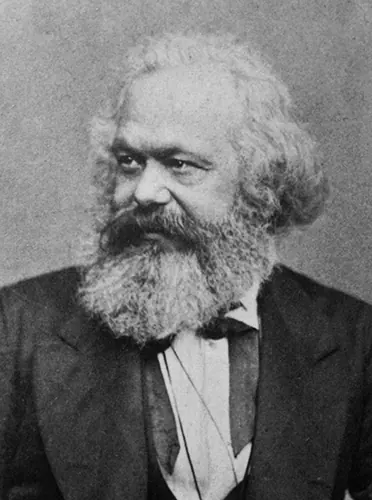
Karl Marx was a German philosopher, political economist, and revolutionary whose ideas about class, capital, and history reshaped the modern world. Born in Trier in the Kingdom of Prussia, he trained in law and philosophy before turning his formidable attention to the machinery of industrial society. With his collaborator and lifelong friend Friedrich Engels, Marx argued that history advances through class struggle, and that the industrial age had distilled this struggle into a stark contest between bourgeois owners and the proletarian workers who powered their factories. His 1848 pamphlet The Communist Manifesto announced, with theatrical clarity, that “a spectre is haunting Europe”—and the spectre had a theory.
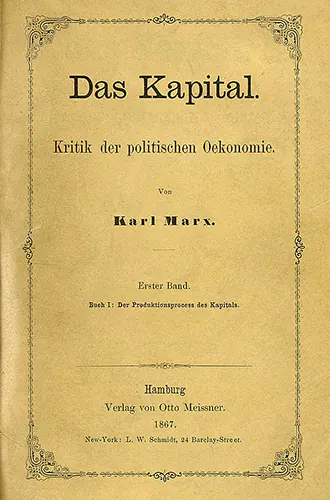
Marx spent much of his adult life in exile, most notably in London, where he wrote in the reading room of the British Museum and wrestled with the dense economic arguments that became Das Kapital. There he anatomized capitalism as a system driven by profit, alienation, and recurring crisis, its restless dynamism both creative and cruel. Few thinkers have inspired such devotion and such denunciation; fewer still have had their names affixed to governments, movements, and monuments across continents. Whether read as prophet, critic, or provocateur, Marx remains a figure who tried to read the hidden grammar of modern life—and then dared to edit it.